Tiny House
Random Posts
random posts8x20-cabin-with-porch A Real Bike Trailer House burningman hobbit-house-floor-plan my-summer-project-tiny-house-3d-sketchup

Can you imagine a Tiny House Community next to the Dancing Rabbit Ecovillage?

by Michael Janzen on July 16, 2010

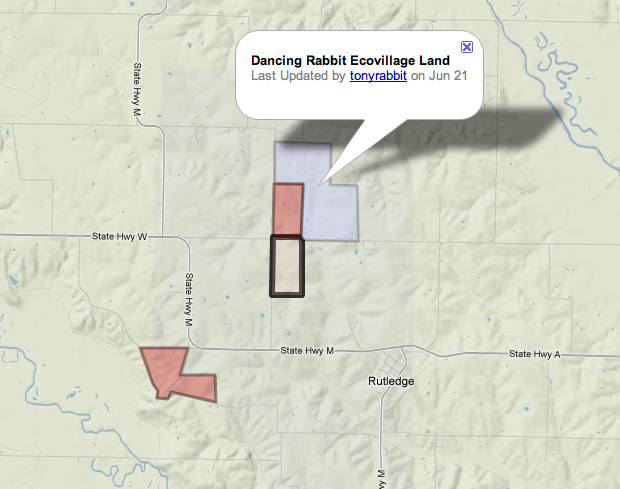
There is an 80-acre parcel for sale virtually next door to the Dancing Rabbit Ecovillage, which is located in the north east corner of Missouri. Rural Missouri is one of those places that is very open to alternative & sustainable architecture making the creation of communities like Dancing Rabbit much more feasible. The rural location can also be a bit isolating which is why developing clusters of communities like this is essential. Luckily there are three such communities are already growing there, providing each other the beginnings of a much wider sustainable community, Dancing Rabbit Ecovillage, Red Earth Farms, and Sandhill Farm. The parcel for sale is outlined in black, and this is an actual Google Map so feel free to explore.


View Land and House Available Near Dancing Rabbit Ecovillage in a larger map

Now imagine taking this 80-acre parcel, with an existing home built from an old church, and develop a new ecovillage based on living simply & sustainably in small homes. The seller is asking $240,000 for the property and since there is an existing home, a traditional mortgage is probably possible, unlike raw land. So theoretically this community could be started by one founder with a good work-from-home job or someone prepared with seed money. Another way to finance an endeavor like this could be to simply collect a few founders with the money, or credit & income, to make the initial investment.

The existing home could eventually serve as a common building, and with the bones of a church seem well suited to be turned back into a space co-owned by the community. It would be up to the founders and community members to decide what kind of community to grow here but it seems like an ideal location and the price seems very reasonable. To learn more about this 80-acre parcel for sale and continue to daydream the possibilities visit the Dancing Rabbit website.

Above are some photos of the main house. Below is a photo of some cob house dwelling neighbors at the Dancing Rabbit Ecovillage. To learn more about Ziggy’s cob house visit The Year of Mud: Cob and natural building. Photo by Stephen.

Cottage Court Proposal

by Michael Janzen on July 1, 2010

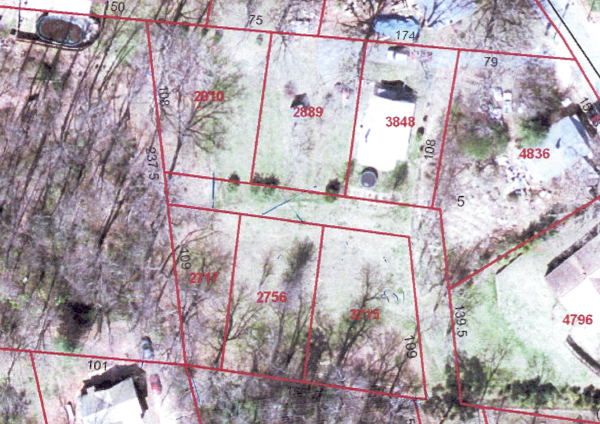
Ron Czecholinski from DIY Home Building is in the process of putting together a tiny house community, and is currently doing his due diligence in choosing a piece of land. The property he’s seriously looking at is six undeveloped lots in Asheville, North Carolina that have the potential for 6 to 10 small houses. Below is the location in a Google Map with a very rough outline of the property. The plat map below will give you a better idea of the property Ron is considering.


View Cottage Court Proposal in a larger map

Local zoning will allow one main house with a studio apartment (attached or in auxiliary building) on each lot. The homes would follow standards for North Carolina Healthy Built certification which include energy efficiency, non-toxic materials, and resource conservation. The houses will likely range in size between 300 and 700 square feet. The expected total cost of construction will be about $200 per square foot which will make the total estimated cost between $60,000 and $140,000 per house (or around $200,000 per lot).

At this phase Ron is looking for people that might be interested in joining him on this adventure. He invisions the community leveraging a light version of co-housing, a model for intentional neighbors. He would also like to setup a Sociocracy to help facilitate community decision making. While he has an interest as a founder and developer, anyone getting involved at the beginning will have an opportunity to help shape the initial community structure and house design.

Ron has been an owner-builder and professional contractor for over thirty years. Learn more about Ron Czecholinski on his website. If this sounds like a project you’d like to participate in contact Ron directly.

Below are some photos of Ron’s more recent renovation project.

Dissolve your HOA/POA Today!

by Michael Janzen on June 7, 2010

Do property owners’ associations (POAs) and homeowner associations (HOAs) really protect home values and communities, or do they simply add another layer of bureaucrats and cost communities money?

I personally think the world would be a better place if most HOAs and POAs were dissolved.

Let me first set the stage. If you wanted to legally build a small house you have to deal with many layers of local government bureaucrats who all have a vested interest in enforcing the rules and regulations that have been handed down to them from policy makers. Typically the policies that are created do not actually address the core requirement, the need, but instead go onto dictating a common solution.

Core requirements are things like:

  • A renewable water source,
  • A low impact waste water system, and
  • A power system to meet the needs of the homeowner.

Instead they typically tell you exactly what kind of water, waste, and power options you must use, with no exceptions. This initial roadblock, and the associated costs, typically results in making the property unbuildable by making it too costly.

But no property is unbuildable if your clever enough, and humans are a clever critters. The trouble is that the bureaucrats have been handed a strict rule book that lists specific solutions like:

  • A municipal water hookup, or well,
  • A municipal sewer hookup, or engineered septic system, and
  • A grid power connection.

In other words, the bureaucrats aren’t always allowed to consider new or alternative solutions like:

  • A rain water collection system,
  • A composting toilet and grey water system, and
  • An off-grid power system.

Luckily the off-grid power system alternative is starting to get more traction, but the others are still mostly unrecognized as viable options.

Another Layer to the Bureaucratic Cake

To add insult to injury the HOA/POA jumps in and adds more bureaucratic muck with their own set of rules, regulations, and dictated solutions. All of this is done in the name of protecting the community.

Sadly making changes to how local government is run is very difficult. On the bright side dissolving your HOA/POA could be just a vote away, although it’s probably best to consult an outside independent attorney and accounting firm prior to pulling the plug.  Continue Reading »

Could allotment gardening in Europe provide a model to end Homelessness in America?

by Michael Janzen on November 10, 2009

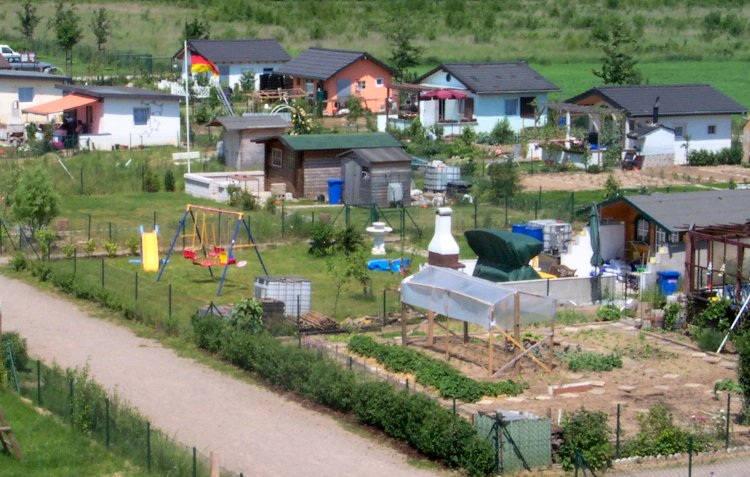
One of my Tiny House Living readers, Wayne, passed this onto me. A Kleingarten, or allotment gardening is similar to the community gardens you might find across America but have some significant differences.

The parcels typically range in size from 200 and 400 square meters each (2,100 to 4,300 square feet) and often include a structure (tiny house) for tool storage and shelter during visits. To provide  governance, member associations are formed to manage plot assignment and the collection of fees for leasing the land and common maintenance.

Typical allotment garden on Käferberg hill in Zürich, Switzerland

Typical allotment garden on Käferberg hill in Zürich, Switzerland

Continue Reading »

CLEAR VILLAGE Call For Entries

by Michael Janzen on September 15, 2009

I must admit I was a little disappointed to see so few tiny homes in the list of finalists for the Design It: Shelter Competition. It just seemed like a perfect opportunity for tiny houses to emerge; although I admit I didn’t make time to draw up an entry so I guess I shouldn’t complain.

Luckily next Wednesday, September 23rd 2009, is the extended entry deadline for another design competition called CLEAR VILLAGE. The challenge is to come up with an ideal vision of a sustainable village. While I have a lot on plate right now, the House for Khayelitsha and Simple Panelized Shelter plans are nearly complete; so I should be able to whip up a tiny house village design for this upcoming competition.

In the mean time read more about the competition at Inhabitat and the CLEAR VILLAGE website. Photo credit wikipedia commons.

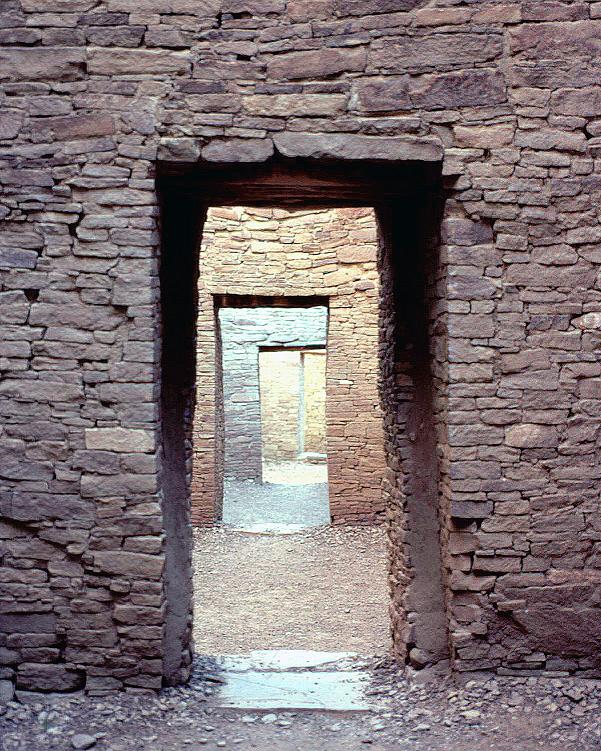
800px-NMtrip-05-042

Just in case you’re curious about the photo… it’s Taos Pueblo and will be the inspiration for my CLEAR VILLAGE entry.  The community has been continually inhabited for 1000 years. This particular structure was probably built between 1000 and 1450 A.D and is still the home of 150 people. You can learn more about this extremely sustainable village on their official website and wikipedia.

Related Posts with Thumbnails

Legal

The contents of this website are provided for informational purposes only and should not be construed as advice. While all information shared here is believed to be accurate, the owner/operator of this website specifically disclaims all warranties expressed, implied or statutory, regarding the accuracy, timeliness, and/or completeness of the information contained herein. Please discuss any specific needs with a qualified professional.
energy