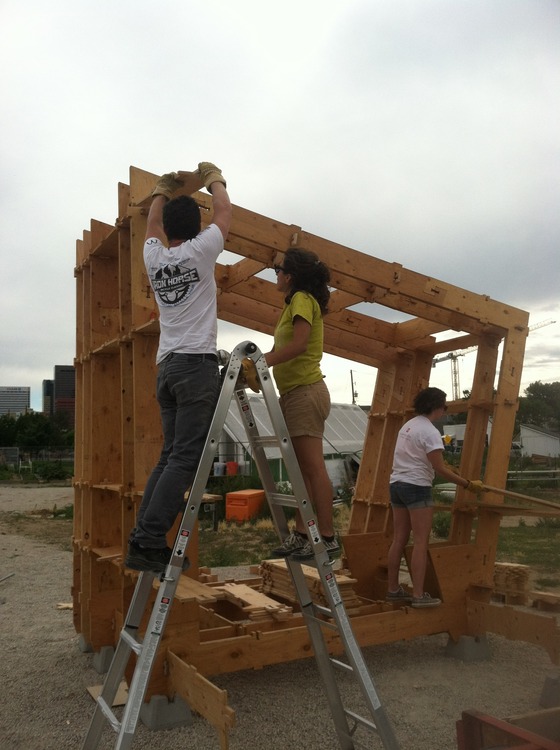
DIY Prefab – 12′x12′ Storage Shed
Malcolm is putting his prefab experience and designs to the test with a 12′ by 12′ backyard storage shed project. Instead of using standard framing methods he’s building individual 4′ by 8′ wall panels on a prefabrication table that had alignment blocks attached to make assembly of the wall panels quick and easy.
In this particular situation the panels are being built and raised into place at the same time, but the same technique could be used to prepare panels for later assembly at a remote building site.
In no time at all Malcolm has the basic structure up and roofed. I’m looking forward to seeing how the finished project will look. Great work Malcolm!
To learn more about building your own prefab building visit DIY-Prefab.com. Also see the finished shed.
![]()
Introduction to Container Homes & Buildings
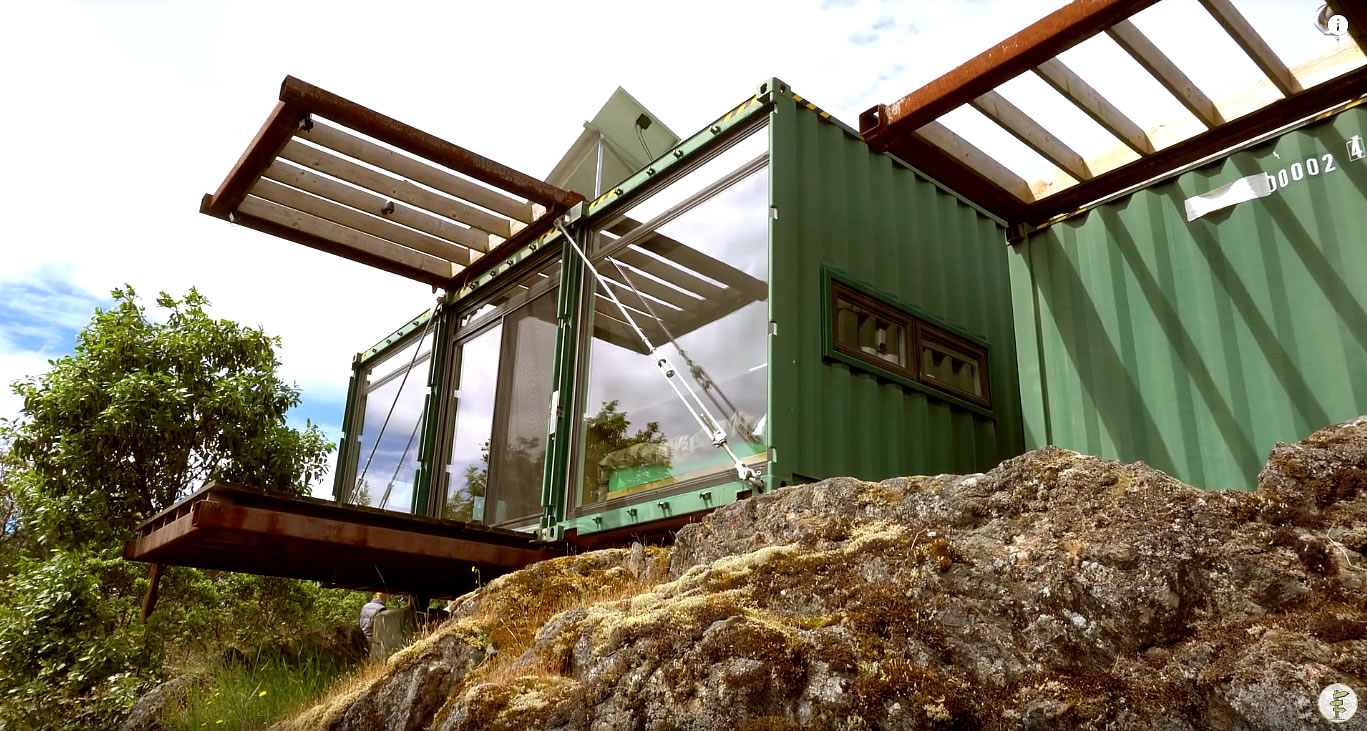
Heather Levin over at The Greenest Dollar shared a copy of a new ebook with me that she and Alex Klein recently finished called, Introduction to Container Homes & Buildings. It’s not a complete how-to book (that’s their next book) but it is an excellent overview of building homes from ISBU containers, and Alex is a true expert on the topic. Here are some of the things you’ll learn in this ebook:
- Why ISBUs are one of the most frugal ways to build a home
- What’s possible with ISBU construction
- The benefits of living in an ISBU home (including how much you can save living in these structures)
- How to make your ISBU home look just like any other home
- Roofing options that will save you literally thousands of dollars on your build
- 20 house plans that illustrate what you can do with ISBU containers (plus the build budget for each design)
- Options for insulating your ISBU
- What you’ll face when you go get financing for your ISBU build
- The benefits of using 20′ containers instead of 40′ containers
The ebook is just under 100 pages and costs $9.95. Visit Alex’s blog or The Greenest Dollar to learn more about Introduction to Container Homes & Buildings. Below are three of the 2o floor plans you’ll find in the ebook.
Sustainable Architecture – The Benefits of Prefab
The other night I confessed my personal aesthetic preference for earthen structures over modern prefab, while also admitting that those shiny metal boxes always catch my eye. Homes made from manufactured parts will never be as sustainable, low-impact, or low cost as earthen homes but they can provide some benefits earthen homes would be hard-pressed to deliver.
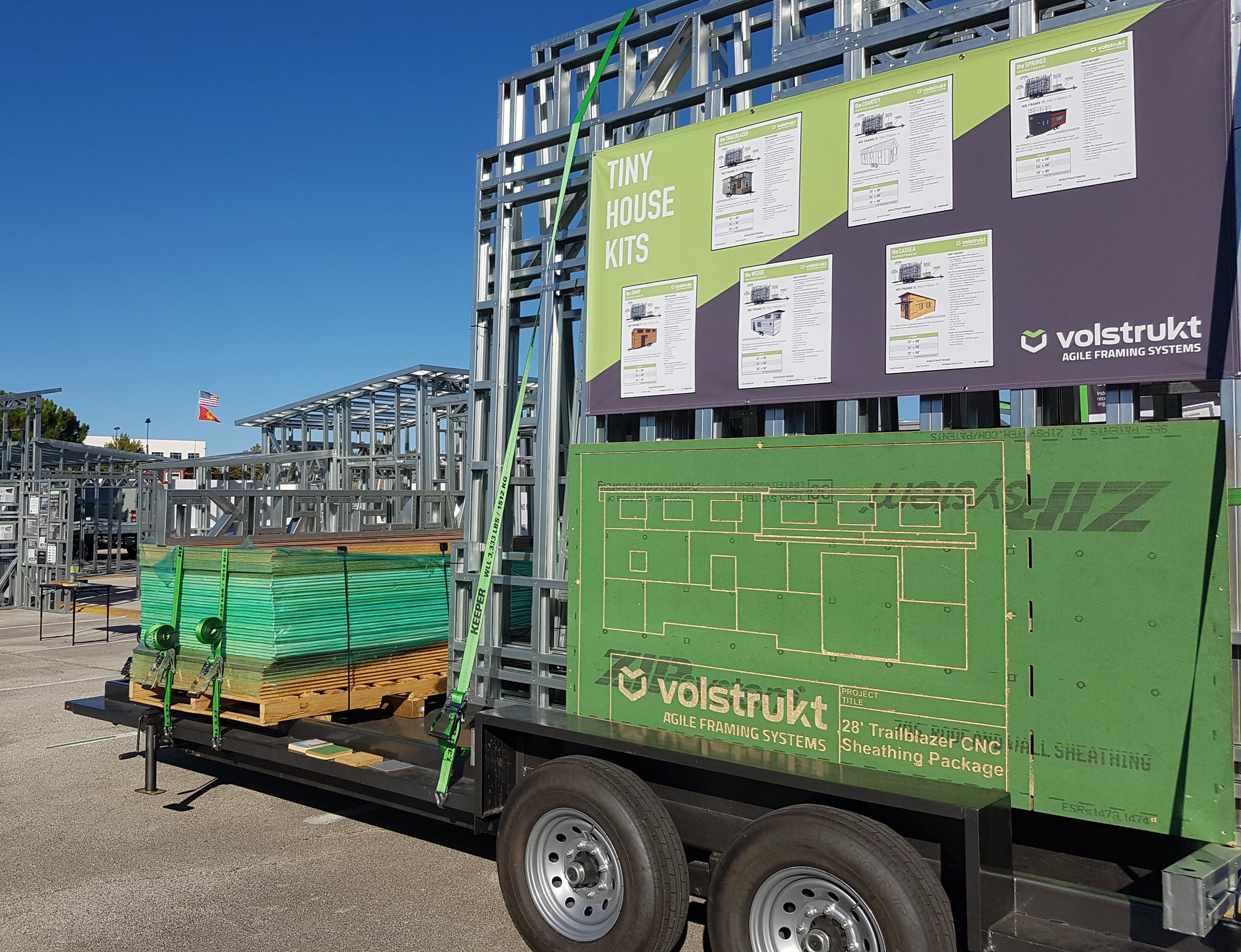
I was reminded of this by several of my regular readers, including Malcolm. The process of prefabrication isn’t really the problem with metal box homes. I should know this well since I designed a do-it-yourself prefab system and put it in an ebook called, Tiny Prefab, A Do-It-Yourself Prefab Building System.
So, I thought I’d do a follow-up post to clarify that prefabrication definitely has it’s place. Here are some of the things prefab can do better then earthen homes.
- Off-Site Construction – By definition prefabrication means that the individual components are built before the assembly process. This manufacturing process usually happens away from the actual construction site which can speed the production of the individual pieces, lowering cost, and increasing quality.
- Transportability – Often the parts of a prefab home can be moved by truck and lifted into place by hand or crane. This can be especially handy on a remote site.
- Rapid Installation – Once all the parts are on site assembly usually goes quickly which can save money on on-site construction costs. It can also reduce the construction impact on the construction site.
- Repeatability – Once you have a design for common components you can rapidly create multiple structures without a lot of additional effort. This can be especially useful if you want to shelter a lot of people quickly.
- Flexible Aesthetics – The aesthetics of a prefab home aren’t limited to metal boxes. The final appearance is simply a design decision.
Comparing earthen homes and prefabrication was really like comparing apples to oranges. Both techniques will result in very different homes with their own strengths and weaknesses, but this diversity is necessary to fullfil our diverse needs.
I’ll still chuckle when I see shiny modern prefabs on Dwell and Inhabitat, but I’ll temper my laughter with the knowledge that one size (or approach) doesn’t fit all.
If you want to learn more about do-it-yourself prefab visit Malcolm’s blog, DIY Prefab.
Thanks again to everyone who commented and kept me on track!
The Truffle by Ensamble Estudio
The construction technique used to create this tiny space might set a new standard for alternative in the world of alternative housing. You have to watch the video below to understand how this unusual cave-like building was put together.
In a nutshell the Truffle is an amorphous concrete blob that was poured in layers with hay bales placed to make it easier to hollow out the cave-like interior. The front, and a few other parts, were then cut off with quarry machinery to expose the interior. To remove the hay inside a calf named Paulina was left to feed for a year.
By no means does this seem like a do-it-yourself project or a very efficient use of building materials but it is an extremely clever way of enclosing space and the final building is as interesting as it is unusual. The exterior is intended to blend into the landscape like rock.
Photo credit Roland Halbe & Ensamble Estudio. Read more at Arch Daily and Dezeen

Tiny House Cluster Under Glass
This was sent to me by Joseph Sandy, who has also helped me out a bit on my Who’s Next entry. It’s a house in Buzen, Japan designed by the architects at Suppose design office that’s more like a cluster to tiny homes.
The ‘streets’ have glass roofs and exterior walls to help strengthen the idea of narrow paths between the different ‘homes’. Using so much glass in a roof doesn’t seem like a very practical approach but I really like the effect it creates. There also seem to be a lot of good ideas here for the tiny house designer/builder.
Great find Joseph! …and thanks for the hands-on help with the Who’s Next entry! Read more about this house at ArchDaily.