Tiny House
Random Posts
random posts lifepod solar backyard office shelter-modular-Khayelitsha-1 blu homes origin old-thd two-sheds-front

Free To A Good Home – Historic Tourist Cabins in Richmond, Vermont

by Michael Janzen on July 8, 2010

I got a note and photos from Devin, a Historic Buildings Specialist who works for the Vermont Division for Historic Preservation, with news that these little cabins need a new home and are free to anyone that can take them away. There are four identical cabins, each measuring about 12′ by 12′. The only catch is that they must be removed by July 31, 2010. Here’s how Devin described the cabins.

Four historic tourist cabins available for FREE to anyone willing to relocate them. Built in the 1930s in Richmond, Vermont, the Checkered House Cabins provided lodging for travelers prior to the construction of the Interstate. The cabins are now proposed for demolition, but are being offered for free to anyone who can safely remove them from the property and relocate them to a new site. Available individually or as a group.

Cabins must be removed from the property by July 31, 2010

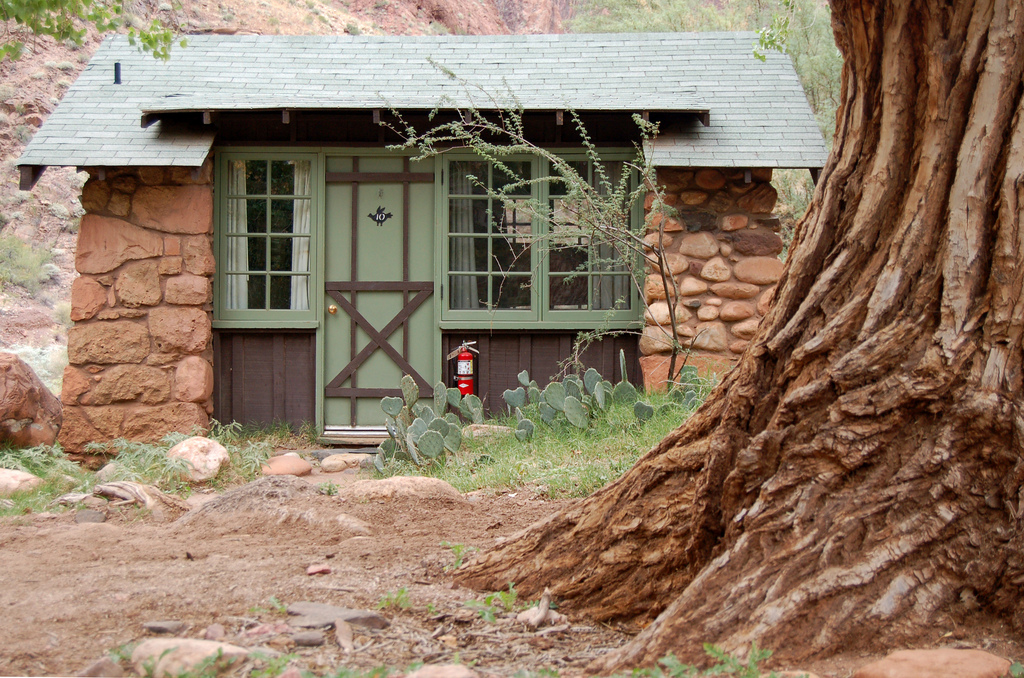
Each cabin measures approximately 12′ x 12′ with a small bathroom and kitchen area. Exterior features include novelty siding, exposed rafter tails, original windows and door, and Craftsman-style entry hoods. These are great examples of roadside architecture and could be rehabilitated into wonderful little guest cottages, playhouses or retreats.

Below is a Google Map of the location. If you’re interested in the houses please contact the owner, Kelli Brown, at 802-503-5651.

View Larger Map

Below are some photos of the buildings.


Filed in Historic

Nearly 500 Year Old Tiny House Village – Build By A Banker

by Michael Janzen on December 27, 2008

My dad passed this Wall Street Journal story onto me today. It’s the story of Jakob Fugger, an extremely rich and influential banker that lived about 500 years ago. One of the philanthropic things he did was to build a village of small homes and apartments for people that needed them. The homes ranged in size from 500 to 700 square feet.

The property was put into trust and continues today with about 150 residents. The rent hasn’t gone up either. It costs about $1.23 a year but there’s one catch. Residents must pray daily for the Fugger and his descendants. To be precise, before moving in residents promise to say three prayers daily: the Lord’s Prayer, Hail Mary and the Apostles’ Creed. The required prayers aside this sounds like a pretty good idea for today’s collapsing housing market. Maybe someone in a position to create something amazing will read the article and take action. Maybe? Photo credit WSJ. Read the original article.

Filed in Historic

Alone in the Wilderness – The Story of Dick Proenneke

by Michael Janzen on October 31, 2008


I got an email from a reader named Betsy (Thanks Again Betsy!) the other day after she had read about my upcoming nine tiny free project. Along with her note she sent a link to a movie about a man named Dick Proenneke. You may already know his story but I’ll summarize it below for those, like me, who had never heard of him before. But first watch this short version of the movie Alone in the Wilderness (2005). It’s about 9 minutes.

In his 50′s Dick Proenneke decided to spend some of his retirement in the wilderness. He chose a place called Twin Lakes in Alaska and in 1968 built a log cabin using nothing but hand tools. It was about 11′ by 15′. It had glass windows, hand-made wood door hinges, and hand-made furniture including a desk, chairs, bunk, and tables. He even built a stone and mortar fireplace to make it through the cold Alaskan winters.

Initially he planned to stay only a year or so but ended up staying 30 years. From time to time he’d travel back to civilization to spend time with family but continued to call his remote cabin home. In 1995 at age 82 he decided that the -50 °F winters were just too much and decided to live out the rest of his life with his brother in California. Dick Proenneke died on April 28, 2003 and left his cabin to the park service who now maintains it as a historic site and popular visitor attraction.

He also documented his life in film, photography, and writings. When filming himself he’d place the camera in a secure spot while he performed the task he wanted to record. This meant he also captured clips of himself walking and canoeing to and from the camera.

I realize this post is a bit off topic, except for the cabin and lifestyle, but I thought I’d share it with you on this first weekend in November. It’s a really inspiring story and stories like these can really help when times seem like they are getting tough. Don’t you think?

Photo credit to the Park Service.

Filed in Historic

Historic Mobile Chapel

by Michael Janzen on October 1, 2008

A reader, Brent, passed this onto me. I really like running across historic tiny houses, especially tiny mobile houses. It’s nice to remember that our interest in tiny living is not new. In fact it IS how people have been living for generations. McMansions are just a recent distraction.

I admit this is a little off topic being a House of God and not the kind of house one would literally live in but I suspect this fellow spent more than a few nights in it on the road. Thanks Brent! Here is the original post.

Filed in Historic

Sears Modern Home – House Kits from 1908 to 1940

by Michael Janzen on September 17, 2008

A long long time ago in what seems like a country far far away… Sears, Roebuck and Co. had a popular kit house mail order program and sold between 70,000 and 75,000 kit homes. Over 447 different designs from simple to grand were included in their catalog. They even did custom kits if you gave them plans. I just ran across the old archive of designs. Not all 447 are represented but there is a nice collection on the Sears Archives website.

If the homes look familiar don’t be too surprised; Sears didn’t innovate new styles but instead leveraged the popular styles of the day. The kits were easy to build and used balloon framing which made it easier for unskilled home owners to build the kits. Balloon framing is similar to modern framing except that there were no separations between floors in the walls creating a serious fire hazard. Balloon framing is now banned. Other innovations in these homes were the use of drywall, asphalt shingles, central heating, electricity, and plumbing. But their most valuable feature was that they were easy to build and inexpensive.

Today one could argue that it was inexpensive housing like this that lead to urban sprawl and other negative cultural impacts, but you could also take the point of view that these home kits empowered people to own their own homes. In any event the existance of the Sears Online Archive today is a very valuable resource for those looking for inspiration. Phtoto credit Sears Archives.

Related Posts with Thumbnails
Filed in Historic

Legal

The contents of this website are provided for informational purposes only and should not be construed as advice. While all information shared here is believed to be accurate, the owner/operator of this website specifically disclaims all warranties expressed, implied or statutory, regarding the accuracy, timeliness, and/or completeness of the information contained herein. Please discuss any specific needs with a qualified professional.
energy