Portland Alternative Dwellings
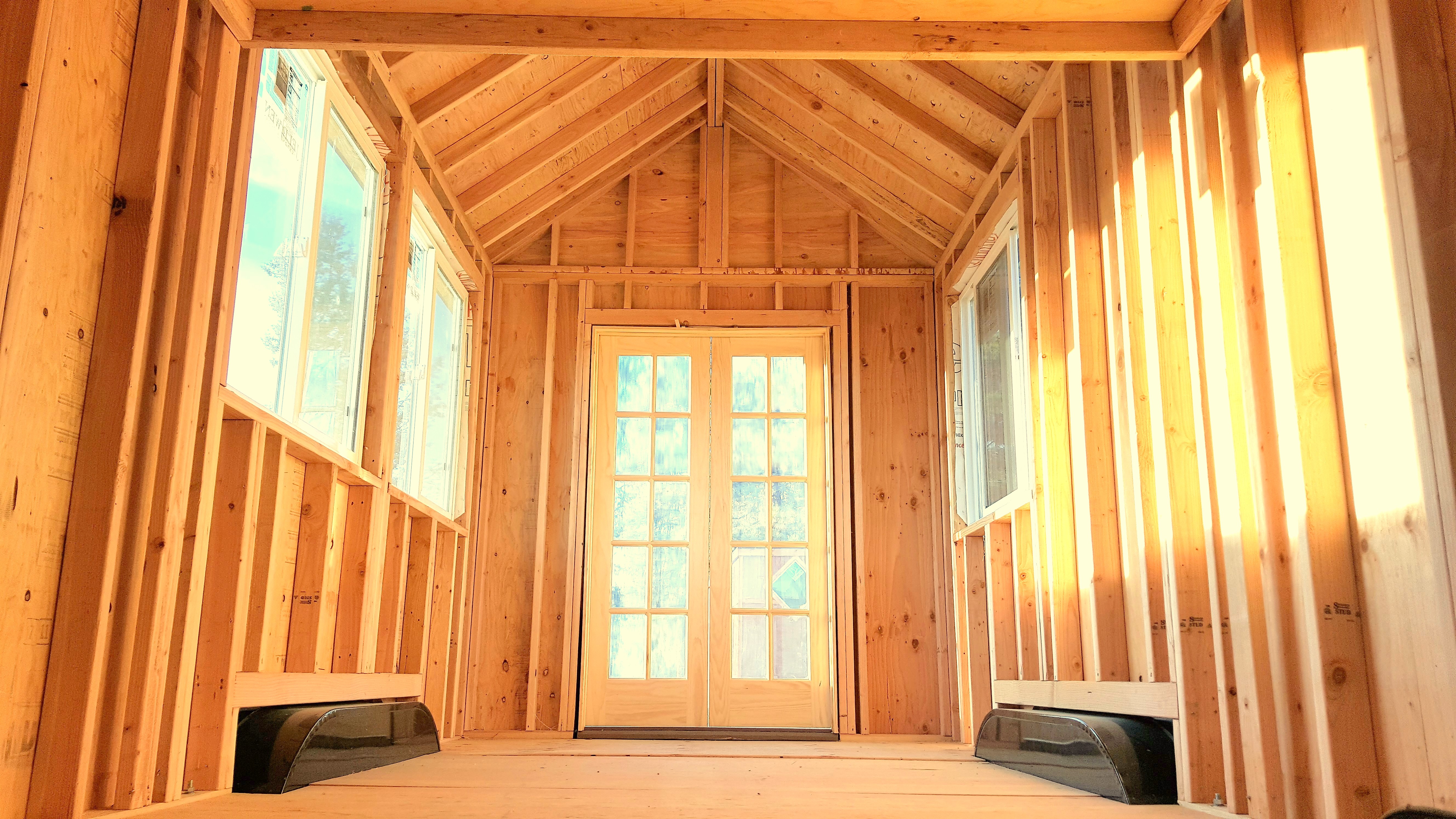
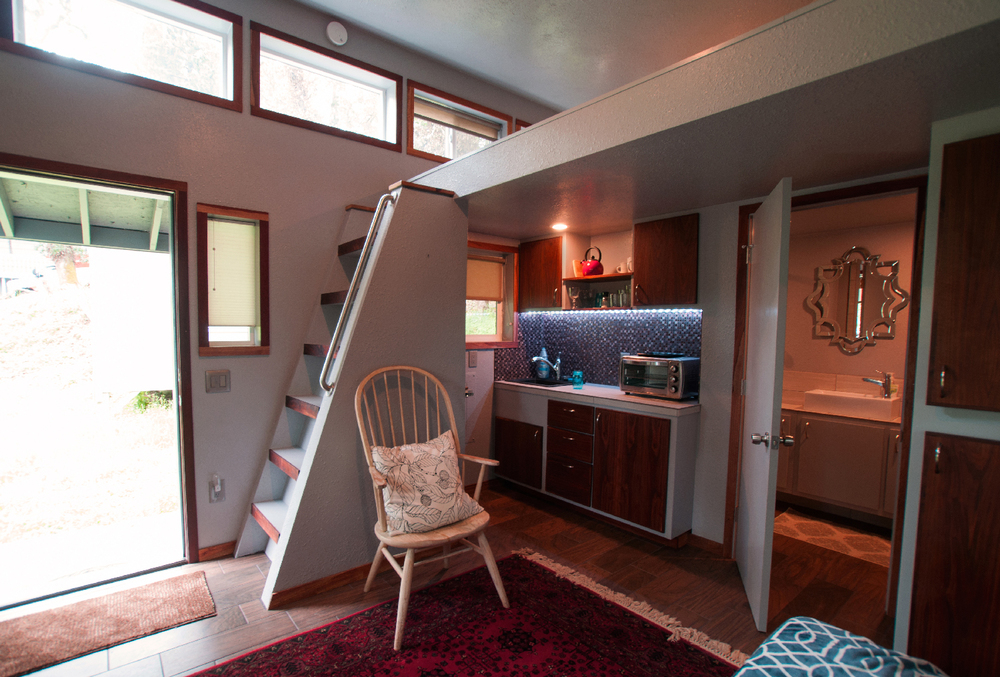
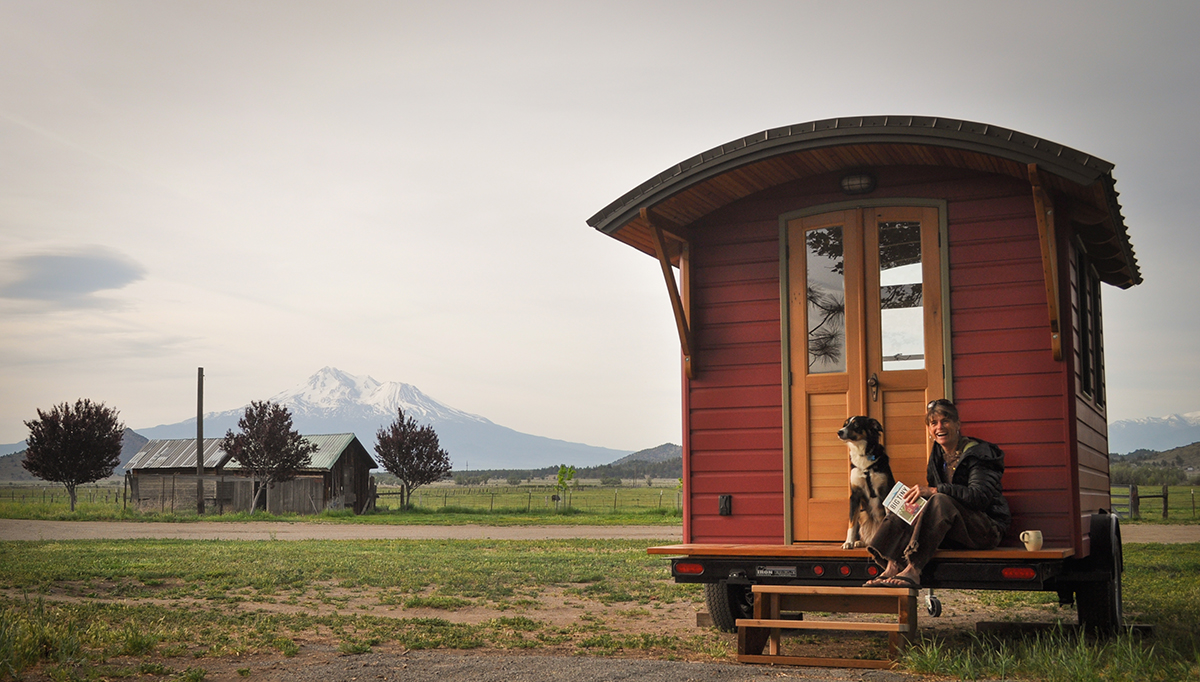
Dee Williams and Katy Anderson have launched the Portland Alternative Dwellings website with the web design help of Tammy Strobel of RowdyKittens. The first design they’ve created is the The Don Vardo (pictured below) which demonstrates the high quality craftsmanship of the homes they will build. It’s intended to be a writing/guest studio and complete with electric radiant heat, a kitchen nook, desk, and pull-out double bed. The structure is incredibly stout and built to take the stress of road trips. This is one tiny house company to watch.
Portland Alternative Dwellings

How to build a Tumbleweed Tiny House
Jay Shafer and the team at the Tumbleweed Tiny House Company have just put the finishing touches on a great video that shows the construction of a Tumbleweed Fencl. I especially liked seeing details like how they connect the house to the trailer and all the details about the interior paneling and exterior siding installation.
Now here’s the video showing the building of the Fencl. Learn more about buying a set of Tumbleweed Fencl Plans.
It’s also worth mentioning that Jay will be teaching his building & design workshops in seven different cities in 2010.
- Austin, TX – January 16-17, 2010 (just missed it)
- Durham, NC – March 20-21, 2010
- Boston, MA – May 22-23, 2010
- Toronto, Canada – July 17-18, 2010
- Portland, OR – August 7-8, 2010
- Boulder, CO – September 18-19, 2010
- Sebastopol, CA – November 6-7, 2010
You might also be interested to know that many of his plans have been reduced a little in price. Be sure to take a fresh look at the Tumbleweed Tiny House Company website.
Backyard Shipping Container Office
One of my regular readers, Malcolm, spotted this little building on Oregon Live this morning and passed this onto me. It’s a little home office built from an 8′ by 20′ shipping container. Mike Corvi, a Southwest Portland resident and businessman, bought the gently used empty metal shell for $2,900 and then with the help of a couple of experienced builders, friends, and some sweat equity had a usable building within 6 weeks for a cost of $8,000. It sounds like the next step for Mike could be a business manufacturing complete units like this for about $16,500 each. Thanks again for the tip Malcolm!
Little House Construction Workshop with Dee Williams
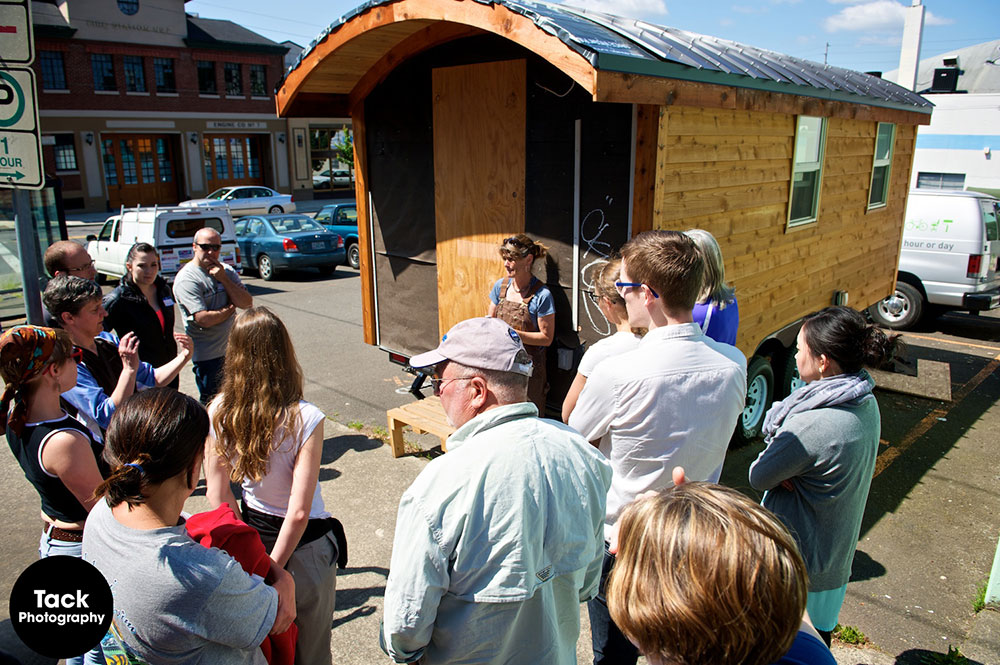
Dee Williams will be sponsoring a little house construction workshop on June 27, 2009 in Portland, Oregon. It’s a one-day workshop taught by Dee and KT Anderson with a combination of classroom and hand-on training. It’s not a design workshop but a real hands-on construction workshop where you’ll learn things like how to connect your tiny house securely to a trailer, general construction techniques, building codes, and staying safe with power tools.
You might recognize Dee Williams from the many news stories that have covered her simple living adventure since she started living in her Tumbleweed tiny house back in 2004. It took her 3 months and $10,000 to build her house and much of it was made from salvaged building materials and hands-on sweat equity. Continue Reading »
Signal Shed
I spotted this on materialicious the other day. It’s a cabin in Oregon. The designer, Ryan Lingard, actually calls it an adventure outpost, which has a nice ring to it too. I just have no idea how an adventure outpost differs from a cabin but it does sound like fun.
There are a few things I really like about the signal shed. The first is it’s modern design which seems to be uncommon among tiny houses. Its shape is a simple rectangular shed but the front porch is cut-out from the otherwise rectangular box. This provides a nice semi-protected exterior space and breaks up the otherwise plain shape. To top it off a large door can roll open to bring the outside in. For those nights and days when this is not ideal the large door can be closed.
The other thing I like is how it has been designed to be secure while the owner is away. Notice that the small windows are hidden behind the wall slats on the side and back walls. The windows also seem like they would also be too small to climb through even if the exterior siding were cut or removed. All this adds up to an aesthetically pleasing design that is secure without overtly looking fortified. Photo credit to Ryan Lingard.