Random Posts
random posts shasta pod john-wells

How To Make Unbuildable Land Buildable with Rainwater Collection

by Michael Janzen on June 10, 2010

I’ve been playing with the idea of finding ways of building on unbuildable land. The term unbuildable land typically refers to property located in a place with a lot of code restrictions. There probably are places that you’d be hard-pressed to build a house too, like a cliff or lake bottom, but even in those extreme locations, I bet there are people clever enough to pull those feats of engineering.

So for the sake of argument, lets say that most unbuildable land is ‘unbuildable‘ because of some rule, regulation, or requirement that other humans have placed on the community. I’ve been using California Pines, a giant failed subdivision in the remote northeast corner of California, as a basis for this design exploration.

In order to build at California Pines, a local realtor told me that you must have a well drilled ($10,000) and an engineered septic system ($20,000) installed before building permits for a cabin would be issued.

But what if you were able to come up with a simpler low-cost water system and were able to convince the powers-that-be that it was a perfectly viable option? You’d be half way there and only need a waste water system.

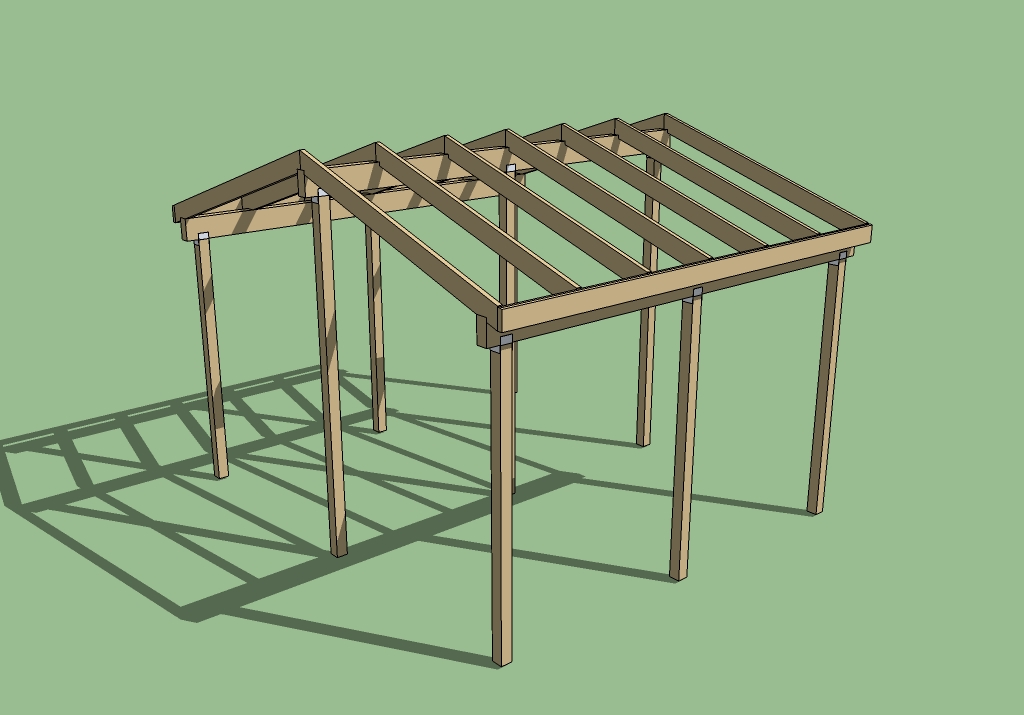
For example, imagine an open (or closed-in) 16′ by 16′ shed that collects rain water, houses a little PV solar system, and shelters your firewood. This could theoretically be the first structure you build on the lot and while your away it happily collects rain water and stores it away in the two 350 gallon tanks.

A first flush valve redirects the first couple gallons of dirty water, from the bugs, dust, and bird poop that has collected on the roof. This keeps the stored water as clean as possible. Before drinking the water you’d run it through a filter. The solar electric system on the roof isn’t needed for the rainwater collection, it’s just a handy addition. The little storage loft/shelf is for storing the batteries and electronics for the solar system.

It rains just over 12 inches a year at California Pines. The roof on this shed is about 200 square feet which should collect about 100 gallons of water for every inch of rain. So in a year, this small roof should give you 1,200 gallons of water, which would overflow the 700 gallons of water storage pictured here. Luckily it rains fairly steadily year-round in Modoc County so your water supply would theoretically be used-up if you visited your property regularly.

To make your presentation to the powers-that-be stronger, you could refer to coastal communities like those in British Columbia, who have recognized that continued well drilling is not the most viable long-term option for supplying water to homes. I found an excellent document from the Island Trust Fund website that outlines exactly what they are recommending. Download a copy of their Rainwater Harvesting FAQ (pdf).

Another precedent setting example are the rainwater collection efforts being made in Texas. The Texas Water Development Board has also embraced rainwater collection as a viable alternative to drilling more water wells. Take a look at this The Texas Manual on Rainwater Harvesting – 3rd Edition (pdf).

Armed with a low-impact, low-cost, and sustainable solution like this plus examples of communities making rainwater collection a common alternative to drilling wells, might just help you change the minds of your local policy makers, and make your previously unbuildable land, buildable.

Innovative Orphanage Design in Thailand

by Michael Janzen on August 20, 2009

This is an incredibly innovate orphanage design by TYIN, a student-run Norwegian non-profit organization focused on developing humanitarian architecture. Soe Ker Tie House is one of four projects recently completed in Thailand near the border with Burma. The design is the result of working closely with the local people and a utilization of local materials. The bamboo for the huts was harvested just a few kilometers from the building site. Some of the primary design challenges centered around collecting rainwater, natural cooling, and finding a safe way to handle sewage.

I’m especially impressed by how such sculptural forms could also be so utilitarian. It seems like every time you turn around you find another extreme architectural design that forgets that form must follow function. These little buildings don’t seem to leave anyone behind. In fact they are also a good reminder that a home doesn’t necessarily need to be complex or expensive to be incredible valuable. They are also a testament to the fact that a little clever design and craftsmanship can add a whole lot to the quality of life. Image credit to TYIN.

Soe Ker Tie House exterior

Rainwater Collection and Nine Tiny Feet

by Michael Janzen on June 29, 2009

I spent the better part of last week traveling to Los Angeles. Visiting that town always makes me think about sustainability and self-sufficiency because the whole place seems so dependent on outside natural resources; although you could probably say that about most big cities. As we drove up and down Interstate-5 past all the dried up farms I couldn’t help but think about how much rainwater my nine square foot concept house could actually capture.

nine-tiny-feet-20090629-front

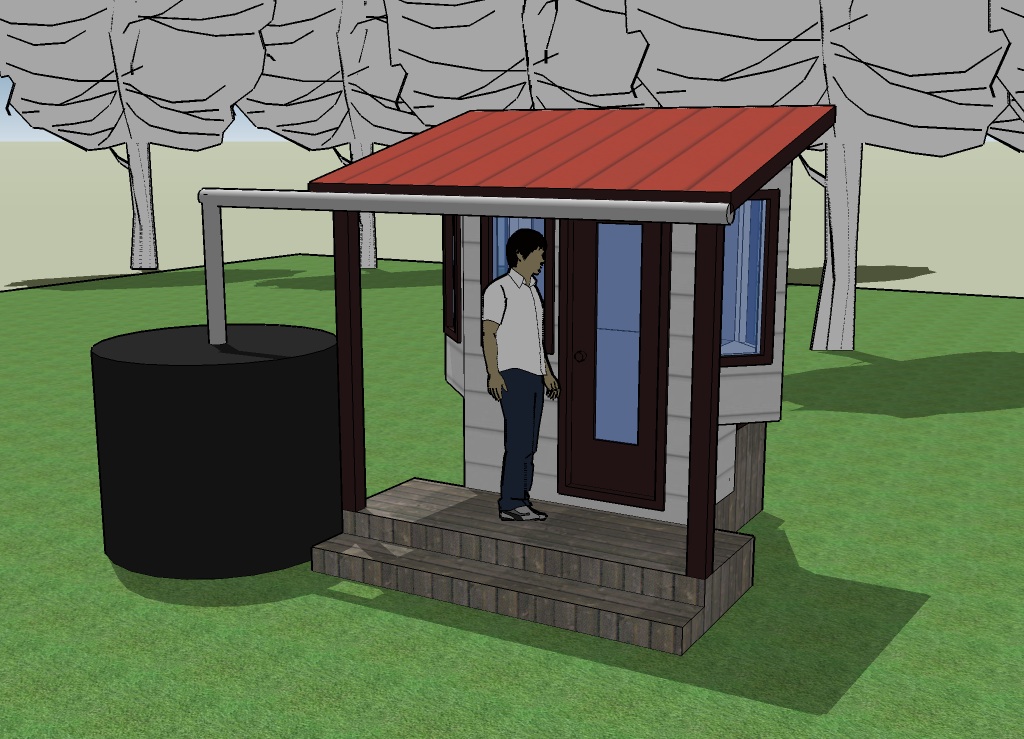
I came up with this slight refinement to the previous design which has a larger single roof surface that spans the interior space, porch, and bay windows. This roof is about 50 square feet and if my math is right this roof would collect about 425 gallons of water per year here in Sacramento, California. Continue Reading »